The Agentic Enterprise
How midmarket organizations can leverage AI by integrating intelligent agents into existing collaboration tools like Slack, transforming it into an "Agentic OS" that orchestrates work across departments.

By Sandi Nuss Zellner · 4 min read
 Expand image
Turning Slack into Your Competitive Advantage
The companies winning with AI aren't deploying more technology—they're building Agentic Enterprises
At the Agentforce World Tour in New York this past week, I watched hundreds of business leaders grapple with the same question: "How do we actually make AI work for our company?"
I get it. I've sat in enough strategy sessions to know that "AI transformation" can feel like one more thing to figure out. One more tool to learn. One more change to manage. One more initiative competing for already-stretched teams.
But here's what clicked for me at the event: the answer isn't another AI tool. It's fundamentally rethinking where work happens.
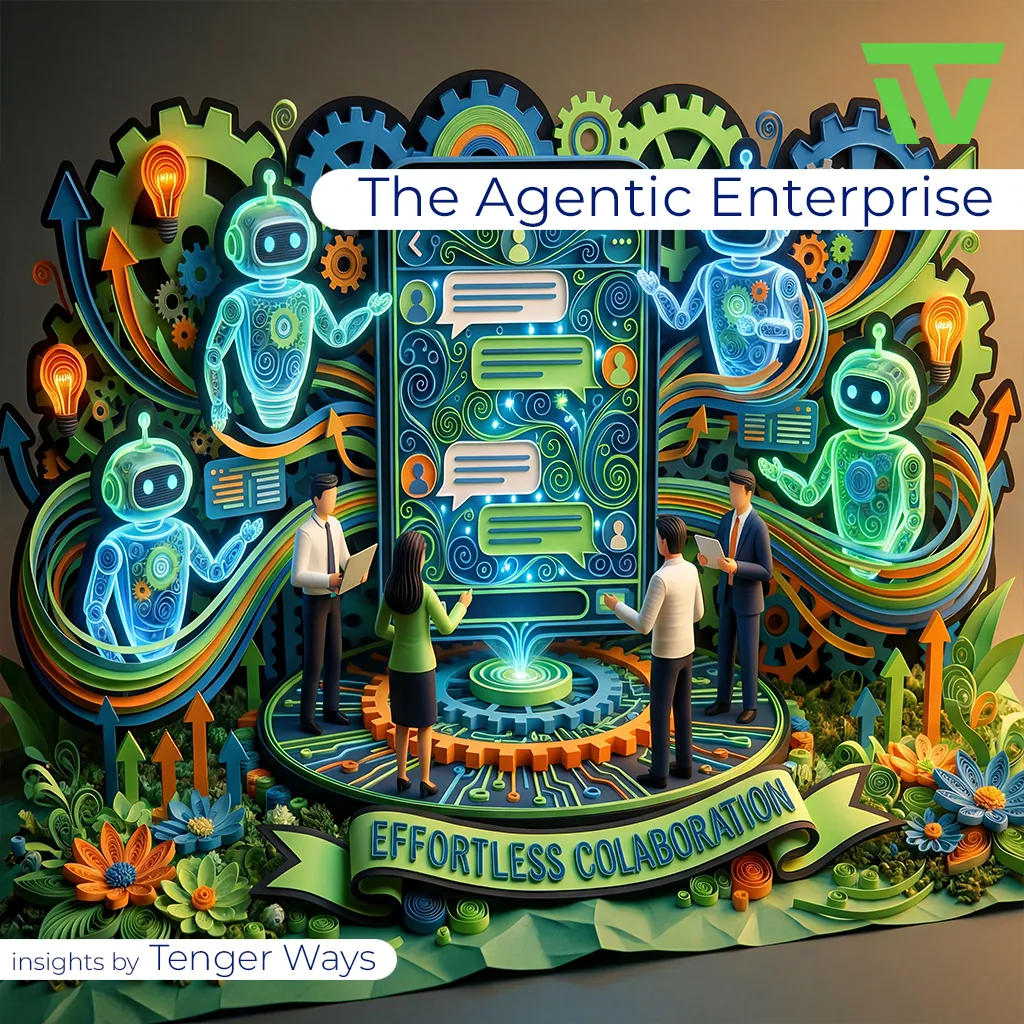
The companies winning with AI aren't deploying more technology—they're building Agentic Enterprises where intelligent agents work alongside their teams in the tools they already use. For example, they're transforming Slack from a messaging app into an Agentic OS—an intelligent operating system that orchestrates work across every department and system.
Why This Matters Now
Your team probably uses 10-15 different tools. Every context switch costs time. Every login is friction. Every "where did I see that?" moment is lost productivity.
Meanwhile, your competitors are consolidating work into a single intelligent hub. They're not asking employees to learn new AI tools—they're bringing AI to where employees already work.
An Agentic Enterprise operates differently. Instead of employees chasing information across systems, intelligent agents proactively surface insights, execute routine tasks, and coordinate work across departments. The critical difference? These agents live in Slack, where your teams already spend their day.
The result: Work happens faster, with less friction, and better outcomes.
Why Slack? Because Adoption is Everything
Here's what kills most AI initiatives: adoption. You roll out a new tool, train everyone, and three months later, only 20% of the team actually uses it.
I've seen this pattern over and over. The technology works fine. The problem is asking people to change how they work just to access it. That's backwards.
Slack changes this equation entirely. Your team is already there. They're already comfortable. They already trust it for critical work.
When you transform Slack into your Agentic OS, you're not asking anyone to change their behavior. You're upgrading the tool they already use every day:
No Learning Curve: Teams interact with agents through normal Slack conversations. Ask a question, get an answer. Request an action, it happens. The interface is already mastered.
Instant Context: Agents understand which deal you're discussing, which project is at risk, which customer needs attention—because they're in the conversation with you. No explaining, no switching screens, no lost context.
One Place for Everything: Sales pipeline from Salesforce. Project status from Asana or Jira. Customer data from HubSpot. Financial reports from your ERP. All accessible through simple Slack requests.
Built-In Accountability: When an agent takes action, the whole team sees it in the channel. No black box. No wondering "did that happen?" Complete transparency builds trust fast.
The Bottom Line: Measurable ROI
Let's talk numbers. Based on what I saw at the Agentforce World Tour and our own client work:
Time Savings That Scale: The average knowledge worker loses 10-15 hours per week to context switching, searching for information, and waiting on approvals. Agentic systems cut this by 60-70%. For a 100-person company, that's 1,000-1,500 hours lost every week, and about 600-1,050 of them reclaimed.
Faster Revenue Cycles: Sales teams with agentic deal rooms close 20-30% faster. Why? Because pipeline data, customer history, and approval workflows are instantly accessible where deal conversations happen. No more "let me check and get back to you."
Customer Retention: Customer success agents that monitor sentiment and engagement patterns flag at-risk accounts 4-6 weeks earlier than traditional methods. That's 4-6 more weeks to fix the problem before they churn.
Institutional Knowledge Capture: New hires reach productivity 40% faster when they can ask agents instead of hunting for who knows what. Your best people spend less time answering the same questions and more time on strategic work.
Competitive Speed: Here's the multiplier effect—when routine work is automated and information is instantly accessible, your team's capacity doesn't just increase, it compounds. Projects that took weeks take days. Decisions that took days take hours.
How Tenger Ways Helps Clients Capture This Value
The gap between "interesting concept" and "measurable ROI" is where most AI initiatives die. At Tenger Ways, here’s how we bridge it:
Start With Assessment, Not Technology: We identify where your team is bleeding time and money—the 20% of friction that causes 80% of the pain. These become your highest-value agent opportunities.
Build for Adoption, Not Features: Fancy AI capabilities mean nothing if your team doesn't use them. We design agents that fit how your team already works, not how vendors think they should work.
Prove Value Fast: Our implementations deliver measurable wins in weeks, not quarters. Early adopters see results, share them with colleagues, and adoption becomes organic.
Scale What Works: We don't boil the ocean. We build one agent, prove the ROI, then expand to the next highest-value opportunity. Each success funds the next.
If you're exploring what an Agentic Enterprise could look like for your organization, let's start a conversation about where the highest-value opportunities might be for your team.
The Path Forward
The Agentic Enterprise isn't a distant future. It's happening now. Organizations that move quickly to establish their Agentic OS will build compounding advantages: better data for training, refined agent capabilities, and teams that are fluent in human-AI collaboration.
What excites me most isn't the technology itself. It's what it unlocks. When you remove the friction between people and the information they need, you're not just saving time. You're giving people back the capacity to do the work that actually matters to them.
For consulting practices like ours, this represents a massive opportunity. We're not just implementing Salesforce or building Slack apps anymore. We're architecting how organizations work and designing intelligent systems that multiply human potential.
The question isn't whether your business will become agentic. It's whether you'll lead the transformation or scramble to catch up.